Britain’s Policy towards Sulaymaniyah, 1918–1932: Kurdish Self-Government, Imperial Strategy and the Making of Iraq
The history of British policy towards Sulaymaniyah after the First World War offers an important example of the relationship between imperial interests and Kurdish political aspirations in the Middle East. During this period, Britain played a decisive role in shaping the political future of southern Kurdistan. Sulaymaniyah, which became the centre of Kurdish political activity, was transformed into a testing ground for British administrative and diplomatic policies.
 By Hamno Hiwa Ibrahim14 November 2026Updated 28 November 202610 min read
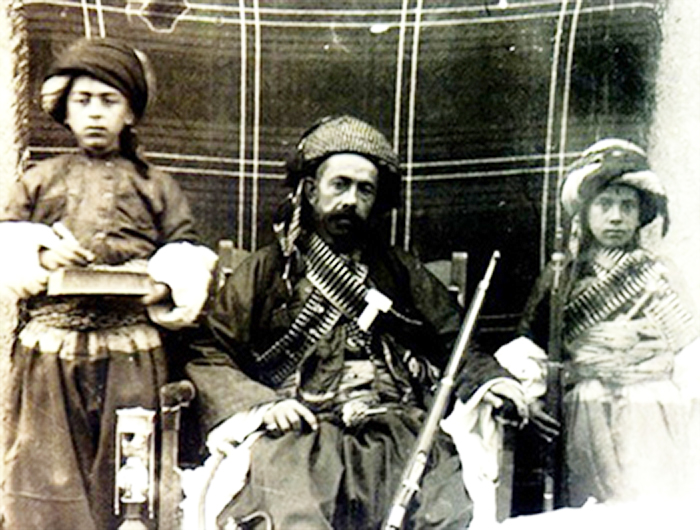
Following the collapse of Ottoman authority, British officials faced the challenge of establishing political control over territories whose populations had different expectations about their future. Many Kurdish leaders sought local self-government and, in some cases, a wider independent Kurdish political entity. British officials, however, had to balance these aspirations against their strategic objectives in Mesopotamia, their regional security concerns and their plans for the formation of a new Iraqi state.
This article argues that British policy towards Sulaymaniyah was shaped by a tension between the temporary use of Kurdish self-administration and the longer-term objective of incorporating southern Kurdistan into Iraq under British influence. The changing relationship between British officials and Sheikh Mahmud Barzanji illustrates this tension particularly clearly.
1. Sulaymaniyah and the Changing Political Situation after the First World War
Before the end of the First World War, Sulaymaniyah was an important political and administrative centre within the former Ottoman territories. Its geographical position, local political networks and connections with surrounding Kurdish districts gave it considerable importance in the affairs of southern Kurdistan.
The defeat of the Ottoman Empire and the withdrawal of Ottoman authority created a political vacuum. Britain, whose forces had occupied Baghdad in 1917 and subsequently expanded their influence in Mesopotamia, became increasingly concerned about the future of the Kurdish districts of the Mosul province.
British officials were not united in their approach. Some considered indirect administration through influential Kurdish leaders a practical way to maintain order and secure local cooperation. Others preferred stronger direct supervision by British political officers. These differences reflected a wider debate within the British administration about the costs and political consequences of governing the Kurdish districts.
The British position was influenced by several considerations: maintaining security in the northern approaches to Mesopotamia, preventing rival regional powers from gaining influence, protecting communications and trade, and ensuring that the territories under British influence did not become a source of instability.
Consequently, Sulaymaniyah became more than a local administrative centre. It became a place where British officials attempted to manage Kurdish political aspirations while preserving their own strategic interests.
2. The Establishment of Kurdish Administration under British Supervision, 1918
One of the most significant developments took place in November 1918, when Major Edward Noel arrived in Sulaymaniyah and became involved in organising a new administrative arrangement under British supervision.
Sheikh Mahmud Barzanji emerged as the principal local figure in this arrangement. The British recognised his influence and appointed him to an administrative position over the Kurdish districts. The arrangement offered an opportunity to govern through local leadership rather than relying entirely on British officials or imposing an administration that might face immediate resistance.
For Kurdish political leaders, however, the significance of this development extended beyond ordinary local administration. The emergence of a Kurdish government in Sulaymaniyah encouraged expectations that the region might obtain a meaningful degree of autonomy and perhaps develop into a wider political entity.
The British authorities did not necessarily share this interpretation. Their support for Sheikh Mahmud was connected to the immediate political and military circumstances. A cooperative Kurdish administration could help maintain stability, collect revenue, secure communications and prevent rival powers from exploiting the uncertain situation.
This difference in expectations became one of the central problems in Anglo-Kurdish relations. While Kurdish leaders increasingly viewed local government as a possible foundation for political self-determination, British officials largely regarded it as an arrangement that could be modified whenever imperial and administrative priorities required.
3. The Breakdown of Relations and the Uprising of 1919
The relationship between Sheikh Mahmud and the British authorities deteriorated rapidly. The British became increasingly concerned that his political ambitions extended beyond the responsibilities assigned to him and that his influence could encourage a wider Kurdish nationalist movement.
In late May 1919, an uprising led by Sheikh Mahmud broke out in Sulaymaniyah. The revolt challenged British authority and resulted in the seizure of local government institutions and the capture of British personnel.
British records reveal that the authorities were particularly concerned about the possibility that the uprising might spread beyond Sulaymaniyah and encourage resistance in other Kurdish districts. They also considered the potential influence of developments in neighbouring territories.
The British military response was decisive. British forces advanced towards Sulaymaniyah and occupied the surrounding area. The uprising collapsed, and Sheikh Mahmud was captured, tried and imprisoned in India.
The events of 1919 demonstrated the limits of the British policy of indirect administration. The same local leadership that had initially been considered useful for maintaining order had become, from the British perspective, a potential challenge to imperial authority.
The uprising also exposed a fundamental contradiction: Britain had encouraged Kurdish administrative participation when it served British interests, but it was unwilling to accept an independent political movement that could undermine its wider regional plans.
4. Sheikh Mahmud’s Return and the Second Kurdish Government
Despite the suppression of the 1919 uprising, the Kurdish question in Sulaymaniyah remained unresolved. British officials recognised that military force alone could not guarantee political stability in the region.
In 1922, Sheikh Mahmud was permitted to return to southern Kurdistan. His return was connected to changing political calculations and the continuing difficulties faced by the British administration in securing local cooperation.
After returning, Sheikh Mahmud re-established his government and proclaimed himself King of the Kingdom of Kurdistan. Sulaymaniyah again became the centre of a political movement that challenged the authority of the British-backed administration in Iraq.
The British response combined political pressure and military action. From March 1923, British aircraft repeatedly bombed Sulaymaniyah. This operation demonstrated the extent to which Britain was prepared to use military power when its political authority was challenged.
By 1924, Sheikh Mahmud’s government had collapsed under the pressure of British military operations and political isolation.
The significance of these events extended beyond the personal conflict between Sheikh Mahmud and British officials. They demonstrated that the British government was not prepared to permit a Kurdish political authority in Sulaymaniyah to determine the region’s future independently of the emerging Iraqi state.
5. Sulaymaniyah and the Formation of the Iraqi State
British policy towards Sulaymaniyah cannot be understood separately from the creation of modern Iraq. After the First World War, Britain sought to establish a political structure that would secure its influence in Mesopotamia while reducing the direct costs of colonial administration.
The establishment of the Iraqi monarchy under Faisal in 1921 was a major step in this process. The political participation of Kurdish representatives and communities subsequently became part of the wider debate over the relationship between southern Kurdistan and Iraq.
The Constituent Assembly and the political processes surrounding the Mosul question were particularly important. British officials used Kurdish participation in these processes to support the incorporation of southern Kurdistan into Iraq.
However, the meaning and legitimacy of this participation remain subjects of historical debate. Aram Rafaat, in his study of the 1926 annexation of southern Kurdistan, argues that the political processes between 1921 and 1925 cannot be treated as straightforward evidence of Kurdish consent, because many Kurds opposed these processes or were excluded from meaningful participation.
The Mosul question was settled in 1925 and 1926: the League of Nations Council decided in December 1925 to place the disputed territory within Iraq, and the Anglo-Turkish-Iraqi treaty of June 1926 confirmed the outcome. This development strengthened the territorial framework of the Iraqi state and reduced the possibility of establishing a separate Kurdish political entity in southern Kurdistan.
For Sulaymaniyah, the consequences were substantial. The city was increasingly incorporated into the administrative and political structures of Iraq, while the earlier experiment in Kurdish self-government had been defeated.
6. Political and Social Consequences for Sulaymaniyah
British policy had consequences beyond the immediate question of who governed Sulaymaniyah. The establishment and subsequent suppression of Kurdish administrations influenced the development of local political identities and the relationship between urban society and the wider Kurdish movement.
The city became a centre of political discussion, competition among local elites and opposition to external administration. The experience of the governments associated with Sheikh Mahmud contributed to the development of political expectations that could not easily be removed through military intervention.
Historical research by Jordi Tejel has emphasised the importance of urban mobilisation in Sulaymaniyah between 1918 and 1930. His analysis shows that British administrative arrangements helped shape the political arena in which local elites competed and in which Kurdish political ideas became increasingly prominent.
The relationship between the city and the countryside also changed during this period. Political mobilisation was not limited to urban notables or tribal leaders; it developed through wider networks of political and social activity.
Although British administration introduced new forms of political organisation, it also produced resistance and strengthened debates about Kurdish representation, autonomy and the future relationship with Baghdad.
The long-term significance of British policy therefore cannot be measured only by the establishment of the Iraqi state. It must also be considered in relation to the political experiences and collective memories that developed in Sulaymaniyah during these formative years.
Conclusion
British policy towards Sulaymaniyah between 1918 and 1932 was characterised by a persistent conflict between local Kurdish political aspirations and British imperial objectives. The initial support for Kurdish administration under Sheikh Mahmud Barzanji was largely based on practical strategic considerations rather than an unconditional commitment to Kurdish self-determination.
The uprising of 1919, the establishment of Sheikh Mahmud’s second government, the British bombing of Sulaymaniyah in 1923 and the incorporation of southern Kurdistan into Iraq in 1926 reveal the gradual transformation of British policy from indirect administration towards the consolidation of the Iraqi state.
Sulaymaniyah was therefore not simply a peripheral town in the history of British rule in Mesopotamia. It was a central political arena in which the future of Kurdish self-government was contested. The British experience in the city illustrates the broader contradictions of imperial state-building: the use of local political leadership when it served strategic interests, followed by its restriction or suppression when it challenged the political order Britain sought to establish.
Iraq's admission to the League of Nations in 1932, which ended the mandate, completed this process, and the territorial settlement reached in the preceding years remained intact. Understanding this history is essential to explaining the development of modern Kurdish political consciousness and the complex historical relationship between Sulaymaniyah, Baghdad and British imperial policy.
Sources and Further Reading
- Azeez, Ranjdar. “British Attitude Towards Southern Kurdistan between 1917 and 1919.” Journal of Garmian University.
- British Library, India Office Records. “Mesopotamia: Kurdistan: The Suleimanieh Outbreak.” File 2879/1919, IOR/L/PS/10/833/1, 25 May 1919–22 December 1921.
- Longrigg, Stephen Hemsley. Iraq, 1900 to 1950: A Political, Social and Economic History. London: Oxford University Press, 1953.
- McDowall, David. A Modern History of the Kurds. 3rd ed. London: I.B. Tauris, 2004.
- Rafaat, Aram. “The Shaky Foundations of the 1926 Annexation of Southern Kurdistan to Iraq.” Kurdish Studies 6 (2018): 200–223. https://doi.org/10.1163/9789004708464_004.
- Tejel, Jordi. “Urban Mobilization in Iraqi Kurdistan during the British Mandate: Sulaimaniya 1918–30.” Middle Eastern Studies 44, no. 4 (2008): 537–552.
- Wilson, Arnold T. Mesopotamia, 1917–1920: A Clash of Loyalties. London: Humphrey Milford, Oxford University Press, 1931.
Image from: By Unknown author - Image in http://www.kovarabir.com/, Public Domain, https://commons.wikimedia.org/w/index.php?curid=19254693