Why Did Rome Destroy Carthage?
In 146 BC, the great city of Carthage fell to the Romans. After three years of desperate resistance, the Roman army sacked the city and burned it to the ground. Its bustling streets, once crowded with merchants, craftsmen and sailors, now lay empty. The city was contested street by street, house by house, until the Roman soldiers killed all resisting Carthaginians. The remaining survivors of the city now faced enslavement.
 By Sudhir Devapalan19 November 2026Updated 28 November 202613 min read
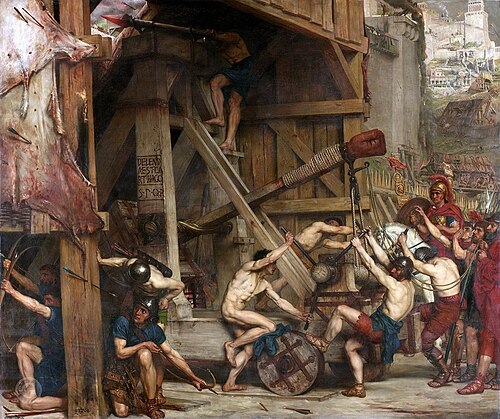
The remaining survivors of the city now faced enslavement. The once mighty city that had challenged Rome for control of the western Mediterranean was systematically destroyed. The brutal rivalry that lasted more than a century was finally concluded. However, why did Rome go so far? Carthage had already lost the First and Second Punic Wars against the Romans. By the middle of the second century BC, Carthage was no longer an empire capable of threatening Rome. It was a weakened city-state trying to rebuild its economy.
Rome, however, demanded the city's complete evacuation and destruction. Understanding this decision requires looking beyond the familiar story of Cato the Elder and his famous declaration that Carthage must be destroyed. The real reason is a combination of Roman insecurity, imperial ambition, memories of Hannibal Barca, political rivalry and a growing unwillingness to tolerate an independent power in North Africa.
Carthage: A Defeated Enemy That Refused to Disappear
The Second Punic War ended in 201 BC with Carthage's decisive defeat at the Battle of Zama. Scipio Africanus had defeated Hannibal, and Carthage was forced to accept a humiliating peace settlement. Carthage lost its overseas territories, surrendered most of its warships, and was forbidden to wage war without Roman permission. It also had to pay an enormous indemnity of 10,000 talents over fifty years. The settlement effectively ended Carthage's position as a major military power. Yet Carthage did not collapse economically. Its merchants gradually rebuilt their trading networks, agriculture recovered, and the city continued to prosper. Its agricultural wealth was particularly impressive. The surrounding countryside produced grain, olive oil, and other goods that helped it prosper.
Historian Dexter Hoyos, in his work on the Punic Wars, highlights the contrast between Carthage's restricted military position and its continuing commercial recovery. The city was no longer a military empire, but it remained wealthy, influential and strategically important. To many Romans, this was an uncomfortable situation. They thought that Carthage was finally defeated. However, seeing it prosper economically caused concerns in the Roman Senate.
Masinissa and the Slow Erosion of Carthaginian Territory
One of the most important developments between the Second and Third Punic Wars was the growing power of Numidia. During the Second Punic War, King Masinissa had allied himself with Rome and played a crucial role in defeating Carthage. His cavalry proved particularly valuable to Scipio Africanus during the final campaign in North Africa.
After the war, Masinissa became Rome's trusted ally in the region. He began to expand his territory by encroaching on the Carthaginians. The peace settlement of 201 BC had left the boundaries between Carthage and Numidia poorly resolved in several areas. This created opportunities for territorial disputes. Masinissa repeatedly exploited this.
Carthage could not simply fight back. Its treaty with Rome prohibited it from declaring war without Roman approval. Even when it believed Masinissa had acted aggressively, Carthage had limited options. Roman decisions were not always automatically favourable to Numidia. Modern scholarship has challenged the traditional assumption that Rome consistently supported Masinissa against Carthage throughout the entire interwar period. Nevertheless, Roman policy increasingly became a source of frustration for the Carthaginians, particularly as Masinissa expanded his kingdom.
By 150 BC, the situation had become increasingly difficult to tolerate. Carthage finally took military action against Masinissa without obtaining Roman permission. It was a disastrous decision. Masinissa defeated the Carthaginian forces, and Rome now had an opportunity to declare war on Carthage for violating their treaty.
Cato the Elder: The Voice Calling for Carthage's Destruction
No figure is more closely associated with the destruction of Carthage than Marcus Porcius Cato, commonly known as Cato the Elder or Cato the Censor. Cato was a conservative Roman statesman. He believed strongly in traditional Roman values, military discipline and simplicity. He was also deeply suspicious of wealth, luxury and foreign cultural influences. His hostility towards Carthage was particularly intense. According to the ancient tradition preserved by Plutarch in his Life of Cato the Elder, Cato visited Carthage in 153 BC as part of a Roman diplomatic delegation. He was reportedly astonished by the city's prosperity and commercial activity. He believed that Carthage posed a significant danger to Rome.
Plutarch also relates a famous story about Cato's speeches in the Roman Senate. Regardless of the subject under discussion, he supposedly ended his speeches with the words: Delenda est Carthago.
The phrase is commonly translated as “Carthage must be destroyed.”
Whether Cato repeated these exact words after every speech is uncertain. Nevertheless, the tradition reflects the intensity of Cato's opposition to Carthage. Rome had nearly been destroyed by Hannibal during the Second Punic War. The Carthaginian general had crossed the Alps, defeated Roman armies at Trebia, Lake Trasimene and Cannae, and spent years campaigning in Italy. For Cato and others of his generation, Carthage was the power that had once brought Rome to the brink of disaster.
However, Cato's hostility should not be treated as the sole explanation for the war. He was influential, but he was not the only decision maker in the Roman Senate. The question historians must answer is why the Roman Senate eventually embraced the policy of destruction. Frank E. Adcock's influential 1946 study, “Delenda Est Carthago,” examines precisely this problem. The Senate's decision cannot simply be explained by assuming that Cato's speeches persuaded everyone. The broader political mood in Rome and the calculations of the ruling elite also need to be considered.
Was Rome Genuinely Afraid of Carthage?
Fear is one of the most frequently proposed explanations for the Third Punic War. The Romans had good reason to remember the Second Punic War. Hannibal's victories had exposed the weaknesses of the Roman military system. Even decades after his defeat, memories of the conflict remained powerful.
There was also a broader strategic concern. Rome was expanding its influence across the Mediterranean, and it increasingly expected neighbouring states to accept its authority. An independent Carthaginian state that was prospering was not something Rome wanted. The fact was still that Carthage had no substantial navy. It did not pose any significant military threat to Rome yet. Its decision to fight Masinissa was a violation of the peace settlement, but it did not establish that Carthage was preparing another war against Rome.
Modern historians have questioned whether Carthage's recovery represented a credible military threat to Rome. The destruction of the city cannot be understood simply as a necessary defensive measure. Other historians place greater emphasis on the psychological legacy of the Punic Wars. Rome's experience with Hannibal had created a deep distrust that could survive long after the original military threat had disappeared.
There may also have been a political calculation behind this fear. By eliminating Carthage, Rome could ensure that no future generation of Roman leaders would have to confront another powerful Punic state. The destruction of Carthage was therefore not simply about defeating an enemy. It was about removing the possibility of its return.
The Real Turning Point: Rome Demands the Impossible
When Rome declared war in 149 BC, the Carthaginians initially tried desperately to avoid another conflict. They understood that they could not win a war against Rome. According to Appian's Roman History, in the section known as the Punic Wars, the Carthaginians agreed to surrender hostages and eventually hand over their weapons and military equipment. The Romans then revealed their final demand. The Carthaginians were ordered to abandon their city and relocate at least ten miles inland. They could no longer live in Carthage itself. This demand transformed the crisis. Carthage was a maritime trading city. Its identity, economy and strategic importance were inseparable from its location on the North African coast. Moving its population inland would effectively destroy the commercial foundations upon which the city had been built.
The Carthaginians finally understood that Rome was not interested in another treaty or a temporary military settlement. It intended to eliminate Carthage as a functioning city. They rejected the demand and prepared to resist. Weapons were manufactured, buildings were stripped for materials, and the population mobilised for the defence of the city. Ancient accounts describe women contributing their hair to make bowstrings. The decision to resist was extraordinary. Carthage had little to no chance of defeating Rome. But they did not have a choice. The Third Punic War had become a fight for survival.
Why Did Rome Want Carthage Destroyed?
There was no single motive behind Rome's decision. Several considerations probably reinforced one another.
Eliminating a potential rival: Rome was becoming the dominant power in the Mediterranean. Its victories over Carthage, Macedonia and other kingdoms had transformed the Republic into an expanding imperial power. However, this could change in the future. Especially since Carthage was prospering economically. Destroying the city removed that possibility permanently.
The legacy of Hannibal and the desire for revenge: The Second Punic War had inflicted enormous losses on Rome. Hannibal's victories were among the most humiliating defeats in Roman history. The Romans still feared another campaign similar to the one fought with Hannibal. Revenge may not explain the entire decision, but it contributed to the political atmosphere.
Political ambition and imperial supremacy: By the middle of the second century BC, Roman leaders were operating in a political environment increasingly shaped by overseas conquest. Military victories brought prestige, political influence and opportunities for wealth. The conquest of Carthage offered another opportunity to demonstrate Roman power. William V. Harris, in War and Imperialism in Republican Rome, examines the aggressive character of Roman expansion and the relationship between warfare and imperial ambitions. From this perspective, the Third Punic War was part of a wider transformation in Roman foreign policy. Rome was becoming less willing to tolerate independent powers that might challenge its interests.
Economic and territorial considerations: Carthage possessed some of the most productive agricultural lands in North Africa. Its commercial position also made it economically significant. Its destruction opened the way for Roman control over the surrounding territory, which was eventually organised as the province of Africa. However, historians disagree over how much economic greed influenced the original decision. The city's agricultural wealth could potentially have been exploited without completely destroying it. Economic motives are therefore best understood as part of a broader imperial calculation rather than a complete explanation.
The Fall of Carthage in 146 BC
The Roman campaign did not proceed as smoothly as its commanders expected. Carthage was heavily fortified, and its defenders fought with remarkable determination. The Carthaginians even managed to build a small fleet, which surprised the Romans. The initial Roman commanders struggled to break through the city's defences, and the siege dragged on.
The turning point came when Publius Cornelius Scipio Aemilianus assumed command in 147 BC. Scipio was the adopted grandson of Scipio Africanus, the general who had defeated Hannibal at Zama. His appointment improved the morale of the Roman troops, and the siege was intensified.
He tightened the blockade, cut off supplies and systematically weakened the city's ability to resist. In the spring of 146 BC, the Romans finally breached Carthage's defences. The fighting was horrific. Roman troops advanced through the streets while defenders resisted from houses and public buildings. Ancient accounts describe soldiers clearing entire buildings during the fighting, with fires spreading through the city.
After days of brutal combat, organised resistance finally collapsed. Carthage was destroyed, its surviving population was enslaved, and its territories were annexed by Rome. The city that had once dominated western Mediterranean trade was no longer an independent political power.
A later tradition claims that the Romans sowed salt over the ruins to make the land permanently infertile. There is no reliable ancient evidence for this familiar story, and it is most likely not true. What is certain is that the destruction was comprehensive enough to end Carthage's existence as a functioning Punic capital.
Scipio Aemilianus and the Irony of Victory
One of the most striking episodes associated with Carthage's fall concerns Scipio Aemilianus himself. According to Polybius, who was present during the final campaign, Scipio watched the destruction of the city and reflected on the fate of powerful states.He reportedly quoted lines from Homer's Iliad describing the eventual destruction of Troy. Polybius then asked him what he was thinking. Scipio is said to have replied that he feared a similar disaster might one day befall Rome. The passage survives in Polybius' Histories, Book 38, and is particularly revealing.
Although Scipio had destroyed his country's greatest historical rival, he knew that this was not permanent. Rome would have to face stronger enemies in the future. Scipio's reported words offer a striking contrast to the triumph that accompanied the Roman victory. He recognised that the destruction of a great rival could not guarantee the eternal security of the victor.
The End of Carthage and the Beginning of Roman Africa
The Third Punic War marked the end of the long struggle between Rome and Carthage. Rome emerged as the undisputed master of the western Mediterranean. Carthage ceased to exist and was wiped off the map of North Africa. Its territories became the foundation of the Roman province of Africa, providing Rome with access to valuable agricultural resources and a strategically important position in North Africa.
Earlier conflicts had often ended with defeated states surrendering territory, paying indemnities or accepting restrictions on their military capabilities. Carthage's fate demonstrated that Rome could now choose a more absolute solution. It was no longer enough to defeat a rival. In certain circumstances, Rome was prepared to eliminate the political entity altogether.
The reasons behind this decision remain debated. Fear, revenge, imperial ambition and economic interests all played a role, although historians differ on their relative importance. Perhaps the most disturbing aspect of the Third Punic War is that Carthage was not destroyed because it showed aggression toward Rome. It was destroyed because Rome's leaders decided that its continued existence was no longer acceptable.
Carthage had survived losses in two major wars. It had even rebuilt much of its prosperity. But in the expanding world of Roman power, survival was no longer enough. In 146 BC, Rome ensured that its oldest and most formidable rival would never rise again.
Further reading at: Overview of the Punic Wars - https://mythandmemory.org/military-history/punic-wars-why-they-are-interesting-thrilling-history/
Historian References and Further Reading
1. Adcock, Frank E. (1946), “Delenda Est Carthago.” An influential scholarly examination of the political thinking behind Rome's decision.
2. Hoyos, Dexter (2017), The Third Punic War, 149–146 BC. A focused academic account of the origins, conduct and outcome of the war.
3. Bailey, Colin (2018), “Rome, Carthage, and Numidia: Diplomatic Favouritism before the Third Punic War.” Useful for the complex relationship between Rome, Carthage and Masinissa.
4. Kiernan, Ben (2004), “The First Genocide: Carthage, 146 BC.” A provocative interpretation of the destruction and its consequences.
5. Miles, Richard (2010), Carthage Must Be Destroyed: The Rise and Fall of an Ancient Mediterranean Civilization. A broad history of Carthage and its place in the ancient Mediterranean.
6. Harris, William V. (1979), War and Imperialism in Republican Rome, 327–70 B.C. A major study of Roman warfare, expansion and imperial ambition.
Ancient Primary Sources
Plutarch, Life of Cato the Elder, especially chapters 26–27. Cato's visit to Carthage and the tradition surrounding his hostility.
Polybius, Histories, Book 38. The fall of Carthage and Scipio Aemilianus's reflections.
Appian, Roman History, The Punic Wars. The Roman demands, siege and destruction of Carthage.